Tuesday, November 11, 2014

Seattle's Annual Coffee Grind


Anyone who knows me understands that I live and breathe coffee, which makes living in Seattle a little overwhelming, because there are so many coffeehouses.  Seattle is Starbucks' headquarters, and I have been known to nestle in the comfy booths of my Queen Anne’s Starbucks, but I also love trying new coffee  shops and their signature drinks. In the newspaper, Seattle Weekly September 24-30th edition, they showcased “The Annual Grind” which was a guide to what’s great in the Seattle coffee-culture and the Indie 15 (Seattle’s most inventive and inviting small coffee shops).  After reading this article, I made the very “hard” decision that I was going to visit each shop mentioned in the article. I had already visited Seattle & Ballard Coffee Works (both locations) and Slate Coffee Bar; therefore, I only had 13 coffee shops to visit; my deadline was before I went to Missouri for Thanksgiving. As Barney Stinson would say “Challenge Accepted!”

Here are a few things you should know about my relationship with coffee. Before I started this coffee challenge, I was a firm believer that coffee should taste like coffee and not a food (i.e. French toast, pumpkin, hazelnut, etc). When I order at a coffeehouse it’s always a plain roast; however, I will order different brewing methods (pour-overs, French press, Aeropress, Chemex, etc.). For this coffee challenge, I went outside my coffee comfort zone and tried beverages with milk and flavors. Also, I am a strong advocate that coffee should always be served hot even it’s 100+ degrees outside; therefore, I tried only one iced coffee beverage and that was only because it was part of the flight of coffees at Slate Coffee Bar. I do not like chocolate (I know, I am odd) and so I avoided trying drinks and treats with chocolate (but there were a few that were sampled). Here's my coffee adventure and majority of the coffeehouses have pictures of my visit.

Ada’s Technical Books and Café
In the article, they mentioned this is a hip space for nerds, and is nestled in the Capitol Hill neighborhood.  It is known for it’s Kuma roasts, a line of housemade syrups, and their rose iced tea. On Yelp, reviewers gushed about the lavender syrup and the grilled cheese sandwich. I ended up ordering a white lavender mocha and a coffee shot. A coffee shot is where they take their ground coffee blend and put it through the espresso machine, and it comes out similar to a French Press. I saw several people ordering the grilled cheese while I was in there and it smelled delicious; I will definitely be trying it during my next visit.


Analog
In the article they mention that this Capitol Hill coffeehouse focuses on simplicity. They are known for their 15-hour cold-brew served from a keg, single brews and pour-overs using Herkimer Coffee beans. I ended up trying a pour-over. The atmosphere is very “hipster” Capitol Hill, with vinyl always spinning on the turntable.


Anchored Ship
This hidden Ballard neighborhood coffeehouse is definitely well hidden. This was a coffeehouse that I visited before I read the Seattle Weekly article. The article suggests trying the Lavender Chai. I ended up trying the coffee on nitro. It’s cold coffee that is suppose to come out with the consistency of Guinness. I wasn’t a fan, but it was definitely unique and matched the personality of this coffeehouse.

Bird On A Wire Espresso
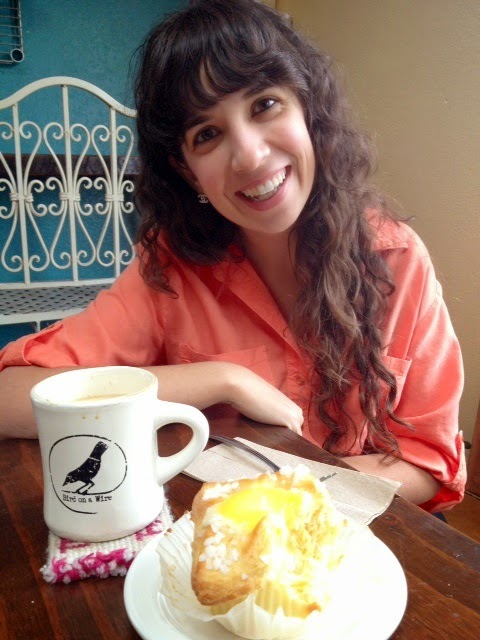
In the article, they mention this their own extracts, pastries, Cold Brew Toddy (a 13-hour slow brew), Nutella latte, and their house blend (Three Peckered Billy Goat). I ordered a Vanilla latte and a lemony pastry. My friend ordered a macchiato, and it was amazing.  The atmosphere of this West Seattle coffeehouse has been compared to “your grandma’s 1950s kitchen” and that is very true with tons of bird memorabilia. Another unique aspect about this coffeehouse is that they do not have Wi-fi, encouraging diners to meet a new neighbor instead of being on their electronics.


Empire Espresso
My favorite consignment shop to sell items to in Seattle is in the Columbia City neighborhood and Empire Espresso (also located in Columbia City and just across the street) is now my go-to place while I wait. In the article they gushed about the weekend waffle bar, Aero or French press, espresso drinks, and Panini sandwiches with homemade sauces. On yelp, reviewers mention that the “must try” drink is the Cayenne Mocha with rice milk. They serve their waffles all day long, and so I ordered a blackberry jam waffle and a Cayenne Mocha with skim milk—and I have to say, this was an amazing combination—loved both of them! The waffle was so delicious and the jam was top-notch. The waffle seemed to be made with cornmeal and it was cooked to perfection! And the Cayenne Mocha…oh my gosh! I do not like chocolate but this drink made me rethink that…the addition of cayenne made this drink absolutely irresistible! I would be interested to taste it with rice milk (I have never tried rice milk before). If you are in Columbia City—skip the Starbuck on the corner and Columbia City Bakery, and try this amazing coffee shop on the side street!


Finn’s Bakery and Café
In the article they recommended trying the Croatian pastries, Danish, quiche, and espresso drinks. I tried their Stumptown drip coffee and a Butterhorn Danish. I didn’t care for the drip coffee and I wished I ordered just a plain espresso. This coffeehouse is nestled in the Magnolia neighborhood and Magnolia is really close to my Queen Anne neighborhood, but I hardly ever visit. After I finished eating my dessert and coffee, I grabbed a gyro from Niko’s Gyro (across the street) for dinner.

Milstead
Milstead is located in the Fremont neighborhood in Seattle. In the article they recommended trying the mocha with 85% dark chocolate from Fremont’s own Theo Chocolate Factory. Since I am no chocolate fan, I did not try it. On Yelp, reviewers recommended a macchiato with vanilla and the ginger plum ice tea. Therefore, I did try the macchiato with vanilla and it was simply delicious and I drank it with two gulps. I also tried a Masala Seattle Fog (a hot chai with milk and vanilla flavoring). The Seattle Fog was good for the first couple of sips but then it was too sugary and milky for me to finish. Milstead has been renown as the “snobbiest” coffeehouse in Seattle.

Neptune Coffee
Neptune Coffee is located in the Greenwood neighborhood of Seattle, and is another neighborhood I haven’t spent much time in. In the article they recommended trying their roasted coffees, espresso-based drinks, and their high-end beans from Geisha. On Yelp, reviewers raved about their breakfast sandwiches. For the first time ever I tried a cappuccino, and their breakfast sandwich. Conclusion: I am sure the cappuccino was good quality, but I realized I do NOT like cappuccinos. Their breakfast sandwich was very delicious, and I ate every crumb. They served with their hot beverages a glass of water-but forewarning, it’s sparkling/carbonated which is I absolutely abhor! Water should taste like water- no bubbles and no fruits or vegetables in it (i.e. lemon and cucumber). There must be a school nearby because there were a lot of kids standing outside of the shop for the bus. Next door to Neptune is Mr. Gyros (they have another location in Ballard) and they have some of the best gyros I have ever tried (the pita is simply divine) so I grabbed one to-go.

Seattle & Ballard Coffee Works
Seattle Coffee Works is located near Pikes Market and Ballard Coffee Works is located in the Ballard neighborhood. I visited both of these establishments before the Seattle Weekly article, because I heard about their slow bar option for coffee. For those unfamiliar to a “slow bar,” it includes unique methods of extraction for a cup of coffee. Brewing methods include: French press, Aeropress, pour over using a Chemex, and vacuum pot. I have tried all of these different brewing methods and Aeropress is definitely my favorite. You can buy an Aeropress at both establishments and on the box of the Aeropress, it states “it is the best cup of coffee you will ever have.” A cup of coffee from the slow bar ranges from $4-$10 depending on what method you choose.  In the Seattle Weekly article they recommended trying the slow bar and trying the Obama Blend “to bring out the Democrat in you.”

Slate Coffee Bar
This was another coffee house I visited before the Seattle Weekly article. I visited because it was featured in another article and encouraged people to visit because “baristas usher you through a coffee experience complete with table service and stemware, and you get to try a deconstructed espresso with milk.” Some friends and I went and did a flight of coffee that consisted of two cold brews, the deconstructed espresso, and two hot brews. In the article, pour overs and the deconstructed espresso are the recommendations. I am going to ramble on about the deconstructed espresso. First of all if you think the espresso was my favorite part, you would be wrong—the milk was the BEST part. Slate Coffee uses Pure Eire Dairy and it is the best milk experience ever. I went with a friend that doesn’t like dairy and she drank all of hers too. They don’t serve food here, but just our luck, there was a pop-up bakery across the street for us to get some food to absorb the copious amount of caffeine we ingested during our flights of coffee.

Street Bean Espresso
This is a coffeehouse that is located in the Belltown neighborhood of downtown Seatttle. In the Seattle Weekly article it stated that this coffeehouse is unique based on it’s community impact: providing training programs and employment for homeless and street-involved youth. The article recommended their espresso drinks, so ordered a latte. Since I volunteer and am involved in non-profit organizations in Seattle, I really enjoy a coffee house that has a mission to help with community reintegration.


Tin Umbrella
This coffeehouse is located in Hillman City neighborhood that is just south of Columbia City. In the article, they recommended trying the house-roasted Chase Your Dreams blend, pastries, and their 24-hour cold-brew Ethiopian Sidamo drink. Yelp suggested the Masala Chai. I ended up getting a drip coffee and tried both the Chase Your Dreams and Ethiopian Sidamo blends, and I preferred the latter. The exterior is adorable, with old porch chairs and chalk drawings on the building. The interior is exquisite with the right amount of charm (mismatched chairs and tables) with a blue chandelier hanging from the ceiling. They have a whole wall filled with merchandise and I was very tempted to buy a t-shirt.


Tougo Coffee Co.
This Capitol Hill neighborhood coffee house is on a secluded and residential part of Capitol Hill, and away from all the noise and bustle of the business part of downtown.  It is known for their pour overs, but unfortunately, they were out of Chemex filters when I visited. Therefore, I tried a drip coffee and an Americano, and preferred the Americano.


Zeitgeist
Located in the Pioneer Square neighborhood and known for it’s Old World charm, this was definitely the biggest coffeehouse in the article. Seattle Weekly recommended trying the mocha made from specially formulated chocolate from a small shop in Gig Harbor (a city in Washington). I snagged a table in this coffeehouse and tried a latte and a gluten-free biscuit with jam. The biscuit was delicious and I definitely licked all the crumbs off my fork. This is definitely a coffeehouse that I would go back to try more of their baked goods and desserts. 


Thursday, October 23, 2014

The FALL hike: Lake Ingalls

FINALLY the scorching, 80-degree, excessively sunny Seattle days are behind us! Summer is by far my least favorite season in Seattle, and I do realize that I am in the minority of Seattlelites with that feeling. It seems like everyone waits all year-long for 40+ days of sunshine...not me! The only thing about summer is the sunsets that I enjoy- and I could live without them if it meant we would go straight from Spring to Autumn.

There are so many things that I love about fall in Seattle: the wonderful weather, crunchy leaves, cozy sweaters, wearing scarves,  pumpkin everything, foggy and misty mornings, crockpot recipes galore, new seasons of TV shows return, wearing boots everyday is a given, banks start putting out the good halloween candy for customers to take, watching Hocus Pocus, cuddling up with extra blankets, and clocks change which means one more hour of procrastination. However, the foremost reason I love Seattle is that it's the optimal and most gorgeous time for hiking the trails.

On my fall hikes must-list was to do a hike that was saturated with golden larch trees. To witness golden larch trees, Seattlelites must drive about 3 hours to the Central Washington area or drive to British Columbia. Timing your hike is important; the larch trees are only golden yellow for a short amount of time. The trail that I satisfied my larch need was Lake Ingalls.

Lake Ingalls is located in the Okanogan-Wenatchee National Forest and is a very popular hiking destination during the summer and fall months. It offers spectacular views of Mount Stuart, However, I went on this hike for the LARCHES, but got so much more out of the hike. I couldn't have asked for better weather. Along the trail in this Alpine Lakes Wilderness, you can also see Mount Rainier and Mount Adams. Wildlife is abundant including mountain goats, and at the lake chipmunks that will try to steal your lunch. There is a lot of rock scrambling on this trail, and there are cairns to help guide you around the rocks but it is very easy to lose the trail (as I did).

Below are some of my pictures that I took during the hike, with an emphasis on the larch trees and Lake Ingalls. This hike became my favorite hike EVER and solidifying once again my love for autumn and Washington.

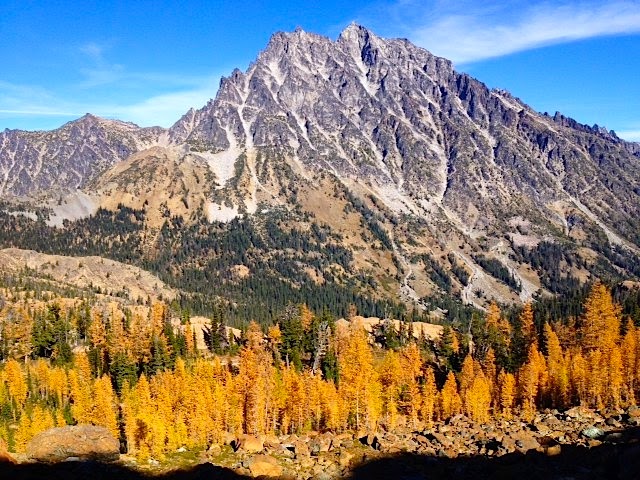
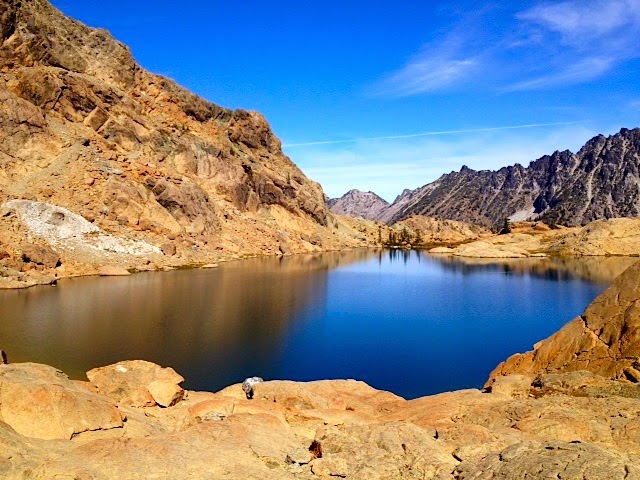
At the end of the trail you arrive at Lake Ingalls. This is Mount Stuart.

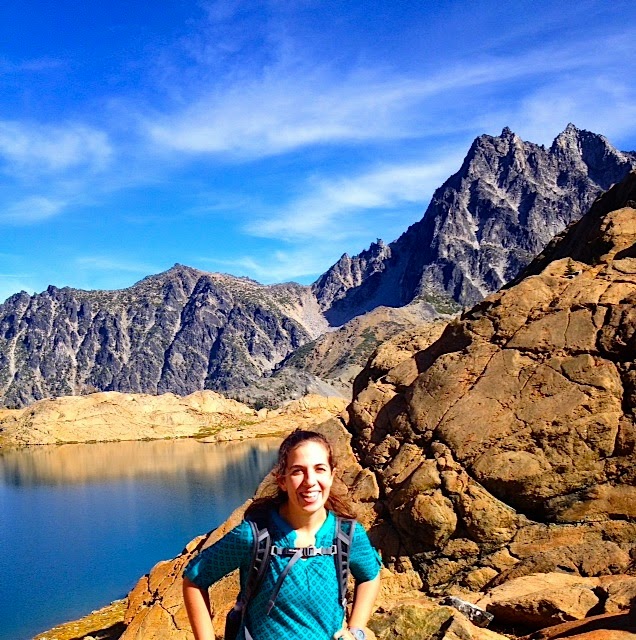
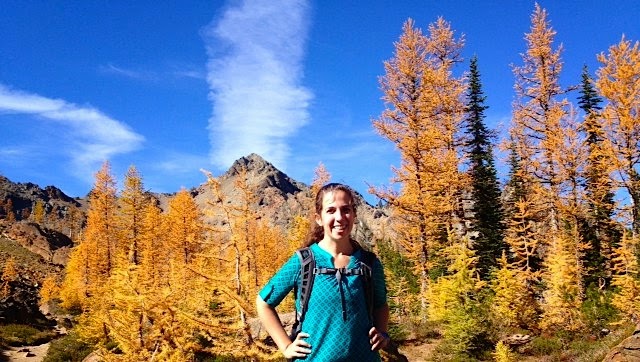
Me at Lake Ingalls

Mount Stuart and a field of golden larch trees

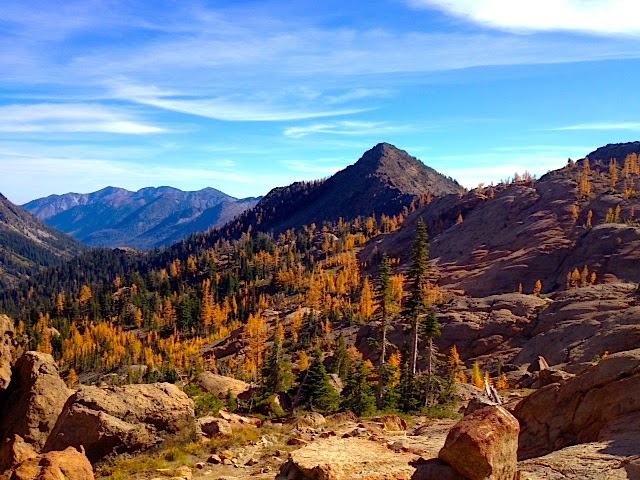
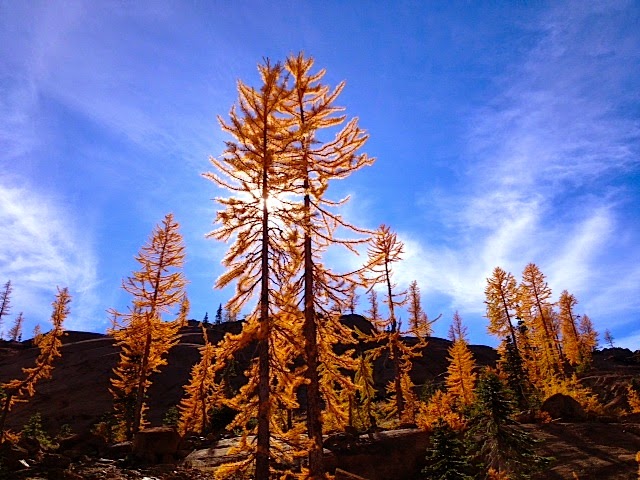
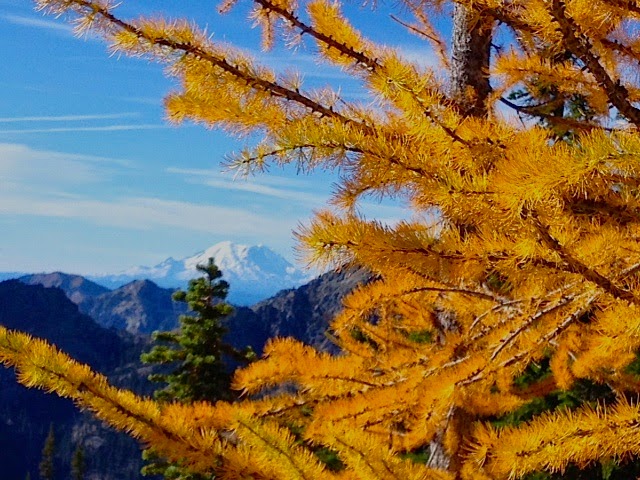
Golden larches

Yellow is the new green

Aren't they beautiful

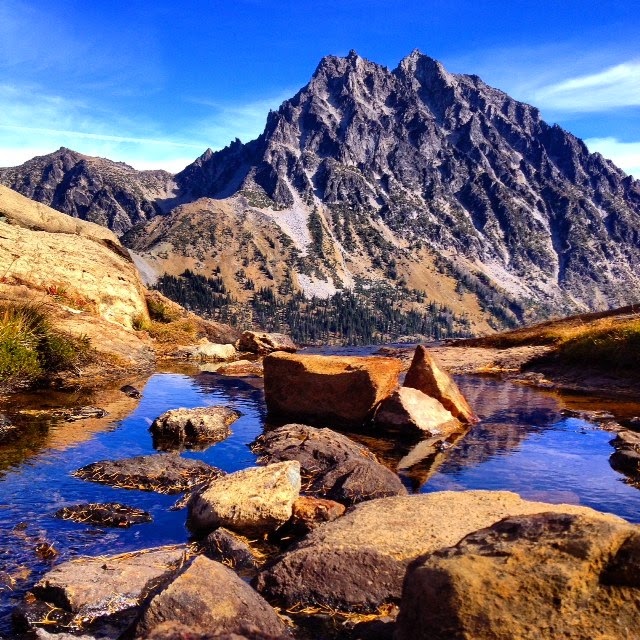
Lake Ingalls and the reflection of the mountains

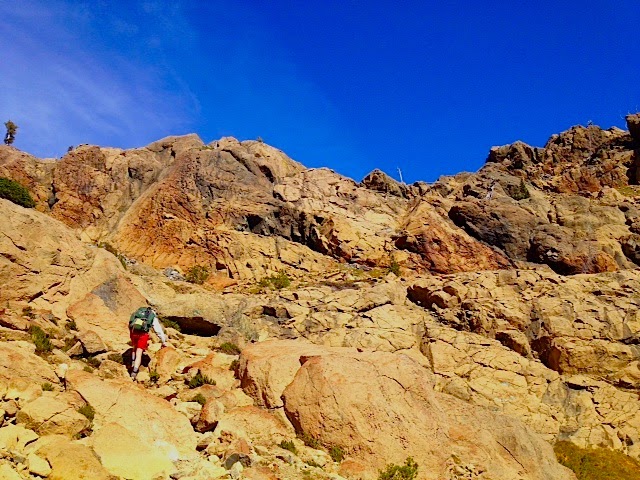
Rock scrambling

Mount Rainier through the golden larches. 

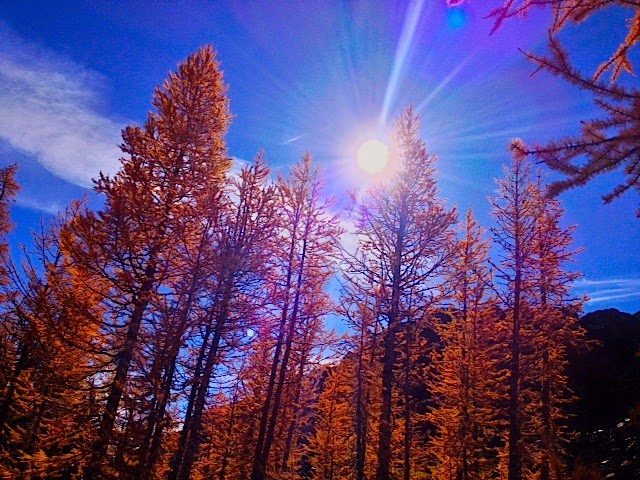
Sunbeamin' through the golden larch trees

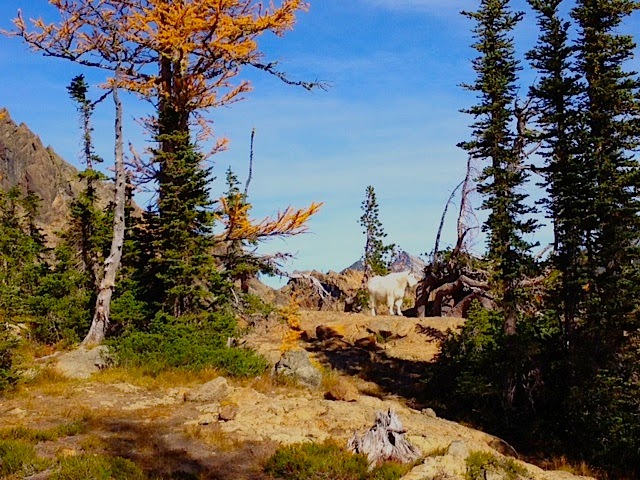
Saw six mountain goats along the trail

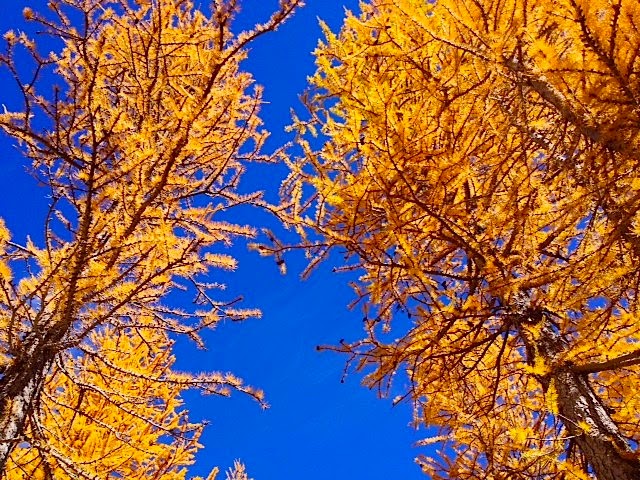
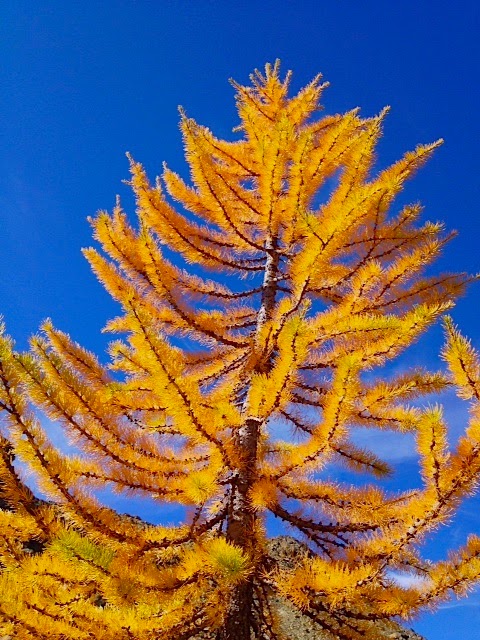
Looking up

Golden Larches everywhere

Up close and personal

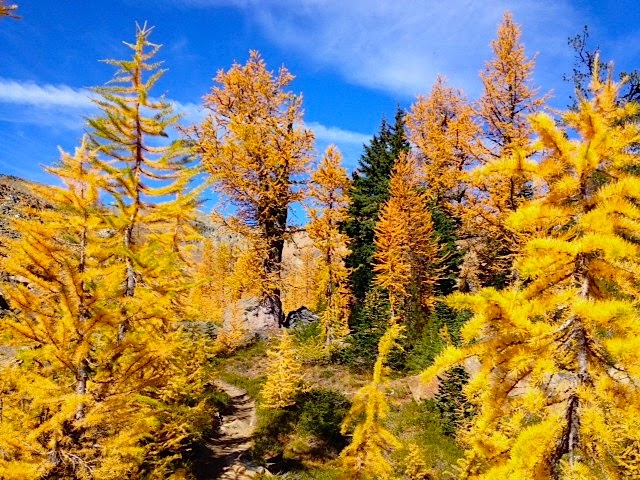
Forest of larches

Entering the Alpine Lake Wilderness and where you start seeing golden larch trees

Standing at the top of a waterfall while Mount Stuart is showing up in the clear skies

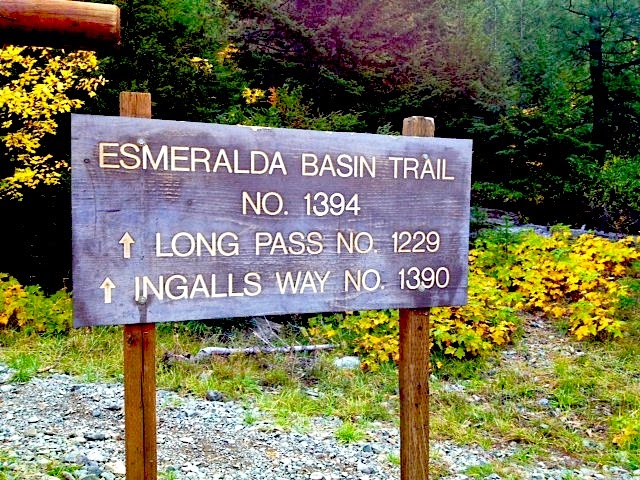
Signage at the beginning of the trailhead

Monday, September 15, 2014

Climbing Coldwater Peak-Mount St. Helens


After almost 30 months living in Seattle, I finally made a trip to Gifford Pinchot National Forest, home to Mount St. Helens. Most everyone knows that Mount St. Helens is no ordinary mountain, but rather an active volcano. It had a destructive eruption in 1980 that was more than news-worthy, but few know that in 2004 it was once again active causing lava eruptions and small earthquakes. During the 2004-2008 eruption, the lava erupted added about 7% of the volume lost in the 1980 eruption.

This summer I have made two separate hiking trips to Mount St. Helens, one day-trip and the other a three-day weekend. The first trip (only a daytrip) was mid-August and we hiked part of the Boundary Trail from the Johnston Ridge Observatory. We hiked the Boundary Trail around Devil’s Elbow to the first overlook of Spirit Lake and then turned back. Also this trip we hiked the family-friendly Hummocks Trail. This day of hiking consisted of a complete overcast. It was so cloudy that we could only see the base of Mount St. Helens and not even a glimpse of the oh-so-famous crater.

This picture is taken from the same spot: showing how cloudy it was during my first visit compared to the clear skies on the second visit.
The second trip this summer was the weekend after Labor Day (three weeks after my first visit); we did a three-day weekend consisting of 35 miles of trails. We hiked Ape Cave, Lava Canyon, Windy Ridge, Coldwater Peak, Harry’s Ridge, and Coldwater Lake. Each trail provided a unique view of Mount St. Helens and it’s surrounding peaks and landscape. During this entire weekend it was nothing but clear skies, so I finally got to witness the crater.

My favorite trail was Coldwater Peak, and that is the one I will showcase in this blog post.

The trailhead begins at Johnson Ridge Observatory, which means I was repeating about 3 miles of the trail that I attempted in mid-August. However, since it was so sunny, it was like I was hiking a completely different trail. It became very clear to me how much the clouds covered up on my first visit when we got to the first overlook of Spirit Lake. Nestled between mountain peaks in the distance was Mount Adams. As we continued on the trail we encountered terrain that was only white ash, which has a very interesting consistency when hiking on it. We passed Harry’s Ridge side trail on our way to Coldwater Peak (we discussed hiking it if we still had the energy and stamina on the returned trip from hiking Coldwater Peak). Just around the corner from Harry’s Ridge was an expansive view of Spirit Lake and Mount Adams. As we stood at this overlook, Coldwater Peak stood behind us.

We began climbing Coldwater Peak, which had gradual switchbacks that allowed alternating views of Spirit Lake/Mount Adams/Silver Star Mountain and Mount St. Helens.  The trail up the mountain consisted of wildflowers, blown down trees (stumps only remaining) and very short trees. Once we got to the top, we were rewarded with an outstanding panoramic view of everything. Since it was an absolutely cloudless day, we could see everything from miles. Two things you cannot see until the summit of Coldwater Peak is Mount Rainier (the tip of the mountain) and the deep blue St. Helens Lake. The sweeping view from the mountain really allowed one to see the devastation of the eruption path caused by the volcano in 1980, and how the area is slowly recovering.
This is at the top of Coldwater Peak: Mount St. Helens and Spirit Lake in the background. The ridge in the middle of the picture is Harry Ridge, which we also hiked that day.
At the top of Coldwater Peak: Mount Adams and Spirit Lake in the background.
Panoramic at the top of Coldwater Peak: Views of Mount Adams, Spirit Lake, Harry's Ridge, and Mount St. Helens.
Panoramic at the top of Coldwater Peak: Views of Mount St. Helens Lake, Mount Adams, Spirit Lake, Harry's Ridge,  and Mount St. Helens.
Mount St. Helens Lake at the top of Coldwater Peak. You can see just the white snow-capped peak of Mount Rainier in the background.
Along the Coldwater Peak trail: blown down tree from the eruption of 1980 and Mount St. Helens.
Bridge along the trail to Coldwater Peak (in the background), you pass it along the way to Harry's Ridge too.
As soon as you pass Devil's Elbow on the Boundary Trail, this is the first overlook of Spirit Lake. That is Mount Adams in the background.
View of Coldwater Peak from the Boundary Trail.
Once we finished our lunch, we hiked down the mountain and decided we were committed to climbing Harry’s Ridge while we were in the area. From the viewpoint of Harry’s Ridge we were able to see the parking lot of Windy Ridge. The day before, we had drove over to Windy Ridge and climbed the staircase trail to the top. If you find yourself on the Boundary Trail, I would recommend making the side hiking trip over Harry’s Ridge because it does provide a different perspective and viewpoint.

Hiking Harry's Ridge trail with Mount St. Helens in the background.
View of Mount St. Helens from the top of Harry's Ridge.
Panoramic view from Harry's Ridge: Mount Adams, Spirit Lake, and Mount St. Helens.
Hiking back to Johnson Ridge Observatory, I couldn’t help but reflect on where I was standing, what I accomplished that day, and what I got to see. Weather is so variant in the Pacific Northwest, and this day was truly a rare occasion and I realized not only how lucky I was to see everything, but was reminded that I live in such an amazing place. People travel from all over the country (and other countries) to come to a place that I call home. I know this isn't the end of the story of my time spent at Mount St. Helens. This trip provided so many memories and continued my love affair with the Evergreen State.

You may not have a volcano in your backyard, but lace up your shoes and get outdoors and explore something, anything!

Monday, September 8, 2014

Euphemania: Our Love Affair With Euphemisms

Euphemisms, I kind of love them. They are especially amusing when I have to explain them to my Iranian father.  Whenever, he comes across them and does not know the meaning, he usually then comments; "how is anyone suppose to learn English with all this American slang?"  However, he is such a good sport; he has a notebook where he writes down the words/phrases so he can refer back to them if needed; even in his late 60s, my dad is still a dedicated student. The most recent euphemism I had to explain to my dad was "couch potato"; however, he called it "potato couch." After learning the meaning behind "couch potato" my dad then used it repeatedly for about a week to describe as many things as possible, including their cockatiel, Joey.

I recently read the book, Euphemania Our Love Affair With Euphemisms. It contains details about where euphemisms come from, why we need them, and what they tell us about who we are. The chapters in the book are: Mincing Words, From Bears to Bowdlerism, Speaking of Sex, Anatomy Class, Secretions and Excretions, Under the Weather and In the Ground, Comestibles, Show Me the Liquidity, Words of War, Brave New Words, and Why We Euphemize. The author, Ralph Keyes, has other interesting books that I plan on reading in the future. Here are some of the most intriguing euphemisms from the book:
  • Winston Churchill asked the butler for some breast of chicken. A women sitting next to him told him he shouldn’t use such vulgar terms. Churchill responded, “What should I have asked for?” The lady then responded, “White meat.” The next day, Churchill sent the woman a corsage with the message, “Pin this on your white meat.”
  • Patients who once had “nervous breakdowns” now have nervous breakthroughs
  • In Midwest towns, brown paper grocery containers are called “sacks” not “bags.” This may be puzzling until you discover that bag is a euphemism for “scrotum” in some parts of the United States.
  • “Bloody” was once the most offensive of words in Britain, today it’s a relatively innocuous piece of verbal punctuation
  • Multipurpose euphemistic words: blankety-blank, doo-dah, thingamajig, thingy, whatsit, whatnot, and you-know-what.
  • Tushie music is what a family in Los Angeles called flatulence. For a while a fart was referred to as “a one-o’clock” in Austraila because before World War II, a cannon was fired at that time of day from Fort Denison in Sydney’s harbor. A onetime euphemism or farting was talking German.
  • Excrement is known as “happy toads,” “creating a big job,” “square root of four” and of course “number two.”
  • Hell became known as Helen, Halifax, and hen. Or, as Canadians called the devil’s abode, h-e-double-hockey-sticks
  • Instead of saying “Good God!” one could say “Good gravy”. Charlie Brown-a creation of devout Christian Charles Schulz-would never say “Good God!” He would say “good grief!” 
  • Shakespearean scholar Pauline Kiernan has tallied more than 180 synonyms for female genitals in the Bard’s plays, 200 for the male version, and 700 verbal variations on sex plays.
  • Bible euphemisms by American lexicographer Noah Webster:
    • “Are there yet any more sons in my womb” was changed to “Shall I bear more sons?”
    • Biblical mothers would no longer “give sucke” to their babies, in Webster’s Bible would “nurse their young ones.”
    • The line “they may eat their own dung, and drink their own piss” in Isaiah 36:12 was refined to read “they may devour their vilest excretions.
    • Even seemingly inoffensive phrases such as “the river shall stink” in Exodus 7:18 gave way to “the river shall be offensive in smell”
  • Euphemisms for trousers: irrepressibles, indescribables, ineffables, unutterables, nether garments, continuations, don’t name’ems, and mustn’t mention’ems
  • Euphemisms for "panty” undergarment, underthing, unmentionable, or smalls (short for small clothes)
  • Academy was a euphemism for “brothel” those who worked there were called academicians
  • Sexual euphemisms: donating DNA, exchanging chromosomes, horizontal aerobics, hoochie coochie, hanky-panky, and roll in the hay.
  • Using sexual euphemism with children: they have a special cuddle or they kiss and hug for a very long time.
  • Anatomy euphemisms:
    • Balding men can be said to have “high foreheads”
    • Wrinkled faces feature “character lines”
    • Among men who don’t feel tall enough  prefer to be called compact, trim, or diminutive
    • Instead of stomach using words tummy, tumtum, breadbasket, Little Mary, midriff, midsection, abdomen
    • When a picture of Barack Obama’s speechwriter Jon Favreau caressing the chest of a life-size Hillary Clinton cutout circulated on the Internet, columnist Kathleen Parker was reduced to writing that Favreau had been figuratively “captured clutching the prospective secretary of state’s, um, pectoral area.”
    • Johnson is the last name most often used for the male sex organ
    • Behind: buttocks, bum, derriere, heinie, culo, tushie, tush, and keister
  • Secretions and Excretions
    • Better mouths never “throw up” and certainly wouldn’t upchuc, retch, barf, spew, puke, hurl or hug the throne, but at times do regurgitate, purge or vomit.
  • Under the weather and in the ground
    • LOL was a euphemism for “little old lady” in hospital corridors
    • When they can’t determine what-if anything-is wrong, some doctors say a patient has TEETH (tried everything else; try homeopathy)
    • FLK for “funny looking kid” (one with an odd appearance but unspecified malady)
    • Wallet biopsy (checking a patient’s ability to pay)
    • Euphemisms for drunk: tipsy, all geezed up, and at peace with the floor


Thursday, September 4, 2014

How To Quinoa: Life Lessons


Some may classify the stereotypical Seattleite (a person whom lives in Seattle) as one who always wears plaid, shields themselves from any bright lights or sunlight, believe umbrellas are for suckers and of course for tourists, recycling and composting are their religion, they can somewhat drive in the rain but it starts snowing and they start abandoning their vehicles on the road, 50% are either driving a Subaru or a Hybrid, and every dish could use some kale or more kale. I have embraced many of these stereotypes, and through excessive people watching have realized why Seattle is regarded as the most “hipster” city in the United States.

A book I have recently come across, How To Quinoa: Life Lessons from My Imaginary Well-Dressed Daughter, is basically a “how-to” on becoming exponentially more interesting and on-trend. The foundation of the book came from the Pinterest board, My Imaginary Well-Dressed Toddler Daughter. The daughter’s name is Quinoa. If you have no idea what “quinoa” is then you are in desperate need of this book, and you should immediately stop eating at Fastfood Restaurants. Here are some examples from the empowering, fictional, girl that will make you realize how uncool your childhood was, but how you can save your own child’s reputation.

The Rules of Being a Hipster:
  • You do not call yourself a hipster.
  •  If something is deemed “cool” or “mainstream” or “popular,” its appeal is immediately over.
  • Only two neck tattoos, temporary or otherwise.
  • One scarf at a time, fellas
  • No well-tailored shirts, no cheap shoes (only expensive shoes that look like cheap shoes).
  • Irony will go on as long as it has to.
  • Mustaches. Period.
Essential Hipster Vocabulary List: mainstream, retro, on-point, vintage, locally sourced, mid-century modern, indie, early adopter, pickled, and organic.

Suspected Undercover Hipsters: Queen Elizabeth, Regis Philbin, Peyton Manning, Honey Boo Boo, and Jeff Gordon

Quinoa-approved names: Aioli, Asterisk, Cardamom, Chai, Chardonnay, Downton, Edamame, Farro, Fig, Hashtag, Iffy, Kale, Latte, Orzo, Paleo, Panko, Saffron, Sriracha, Twerk, Valium, Venti, Wasabi,  and Zoloft

The Seven Deadly Sins of Fashion: yoga pants, pleated jeans, fleece jackets, coveralls, toe socks, athletic jerseys, and Hawaiian shirts

Ten Buzzwords to Get Your Preschool Application Noticed: demonstrated interest, charter, rigor, assessment, e-learning, crowdsourcing, diversity, data-driven, activism, and tolerance.

The key to choosing worthwhile extracurricular activities, Quinoa says, is to follow three simple criteria: Can it be posted on Pinterest? Can it be posted on Instagram? Can it be posted on Youtube? Anything that falls outside these criteria is not worth her time.


Quinoa urges you to avoid these outdated and subpar activities: soccer, violin, finger painting, Gymboree, book clubs, mommy and me, swimming, and piano.

Quinoa’s Top Ten Charities: Kids Against Coveralls, Boat Rides for Orphans, Eighties Awareness,  Friends of Soy, Handbags for Hobos, Yachts for Tots, Makeovers for the Middle Class, Dry-cleaning for the Destitute,  and Eradicating Tie-Dye

Quinoa’s Respectable and Elaborate Playdate Themes: An Afternoon with Ryan Gosling, Mason Jar Mania, Snack Time at Tiffany’s, Mirrors! Mirrors! Everywhere!, and CSI: Preschool

When to Turn Down a Subpar Invitation: no dress code, mention of trampolines/bicycles/laser tag, fairy-tale princess dress-up, words casual or sneakers included on the invitation, BYO anything, crayon or lego affiliation, rumors of juice boxes or raisins on the menu, and locations with word “playland”.

Qunioa’s Essential International Phrases:
  • “It’s a pleasure to meet me.”
  • “Yes, I am the one you’ve been hearing about.”
  • “Bring me a freshly baked pastry before my blood sugar drops any lower.”
  • “I’ll take one of everything.”
  • “This food does not meet my expectations. Please have the chef fired.”
  • “Can you please remove these tourist from the area?”
  • “I’m going to need you to speak English.”
  • “Does this ancient artifact come in blue?”
  • “Here, Driver. Please take this deodorant. And use it.” 
Disclaimer: There is more advice in this book. In addition, the photos in this book will instantly make you feel like you must throw everything out of your closet, hire a stylist, and replace everything you own in your closet and house to even begin to look a fraction of on-trend as the toddlers in this book. Yes, I was envious and jealous of every-single toddler featured in this book. And one of my favorite topics in this book is the page of acceptable children's name; it's absolutely genius!