Sunday, June 24, 2018

The Gentle Art of Swedish Death Cleaning

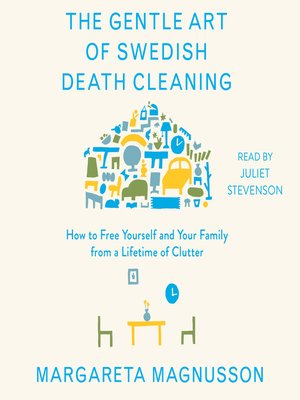
Image result for the gentle art of swedish death cleaning
I just finished reading the book, The Gentle Art of Swedish Death Cleaning: How to Free Yourself and Your Family from a Lifetime of Clutter. The author is an 80-100 year old woman, who has recently lost her husband, and decided she wanted to sort her belongings, so after she died, her children and grandchildren wouldn't have to devote so much time, money, and emotion in decluttering a lifetime of belongings. Even if you are not an older adult, there is some helpful advice that we can implement instantly, or cherish for a later time in your life. Below are some of the statements to aid you in decluttering and possibly guard you from accumulating more things.
  • Death Cleaning is Not Sad
    • It is a term that means that you remove unnecessary things and make your home nice and orderly when you think the time is coming closer for you to leave the planet.
    • It is important because if accomplish it, it can save precious time for our loved ones after we are gone.
    • It's a term that is used when you or someone else does a good, thorough cleaning and gets rid of things to make life easier and less crowded.
    • It is rewarding to spend time with these objects one last time and then dispose of them. Each item has its own history, and remembering that history is often enjoyable.
    • Death cleaning is not about dusting or mopping up; it is about a permanent form of organization that makes your everyday life run more smoothly.
    • Going through all your old belongings, remembering when you used them last, and hopefully saying good-bye to several of them is very difficult for many of us. People tend to hoard rather than throw away.
  • How to begin
    • The more time you spend going through your belongings, the easier it will be for you to decide what to keep and what not to.
    • Start by checking the basement or the attic.
    • Don't start with photographs--or letters and personal papers.
    • In general, when death cleaning, size really matters. Start with the large items in your home, and finish with the small.
  • What to Keep and What Not To
    • The intention is not that we should remove things that make our lives pleasant and more comfortable, but if you can't keep track of your things, then you know you have too many.
    • Low-maintenance closet: the point is not the amount of clothing that makes a person well-dressed. It is all about choosing clothing carefully and then organizing it well.
    • Being organized means that all things have a place of their own.
      • Giving everything a place and you won't feel angry, irritated, or desperate when leaving the house.
  • Getting a Second Opinion
    • If you decide to downsize your home on your own, you may want to talk to someone about it, someone who isn't family, and doesn't have a sentimental connection to the times you want to get rid of.
      • Do not forget to write down a list of all the things you want their advice about.
    • After each room is done, you should take a well-deserved break.
  • Death Cleaning On Your Own
    • Men tend to save most things rather than throw them away. That goes for even the smallest nuts and bolts. They think, and rightly so sometimes, that every little things will be useful at some later occasion.
  • How to Discuss the Topic of Death Cleaning
    • We can more easily say to parents or anyone, really "What are you going to do with all your things when you do not have the strength for or the interest in taking care of them anymore?"
      • Following questions:
        • You have many nice things, have you thought about what you want to do with it all later on?
        • Do you enjoy having all this stuff?
        • Could life be easier and less tiring if we got rid of some of this stuff that you have collected over the years?
        • Is there anything we can do together in a slow way so that there won't be too many things to handle later?
    • A loved one wishes to inherit nice things from you. Not all things from you.
  • Did the Vikings Know the Real Secret to Death Cleaning
    • When Vikings buried their relatives, they also buried many objects together with their body. This was to be sure that the dead would not miss anything in their new environment, and the family members who remained would not become obsessed with spirits of the dead and constantly be reminded of them because of their possessions.
  • Don't Forget Yourself
    • If you decide to downsize your home, it is a good thing to not be in a hurry.
    • When you remember the money you are saving by doing it yourself, it will really make you feel that the work you are doing is worth it.
    • Another benefit of death cleaning: thinking more about how to reuse, recycle, and make your life simpler and a bit smaller. Living smaller is a relief.
    • You can enjoy things without owning them.
  • Cookbooks and Family Recipes
    • Most of the recipes have been slowly thrown away, the time-consuming ones for cakes.
  • Unwanted Things
    • If you receive things you don't really want from your parents or someone else who wants to reduce the number of their possessions in their home, you should be honest and say, "No thank you, I don't have room for this."
      • Just moving things someone does not want in their house to your house is not a good solution for anyone.
    • To be grateful and happy for a present when you first receive it is something different, because that gratitude is not connected to the thing itself but to the giver who gave it to you.
    • A fulskap (Swedish term for cabinet for the ugly) is a cupboard full of gifts you can't stand to look at, and which are impossible to regift.
  • The Throw Away Box
    • "Throw Away" box is for small things that are just valuable to you, as they remind you of special days and happenings.
      • It is very important that you do not choose a huge box, a shoe box should do.
  • Death cleaning is as Much (or more) For You as For the People Who Come After
    • It is a delight to go through things and remember their worth. And if you don't remember why a thing has meaning or why you kept it, it has no worth, and it will be easier for you to part with.
    • So if you do not have children of your own, you still have a duty to sort out your life. Go through your items, remember them, give them away.
    • Going through letters is a very time-consuming--you will get stuck in old memories and perhaps dream yourself back to old times.
    • The more you focus on cleaning, the braver you can become. You may ask yourself, Will anyone I know be happier if I have this? If after a moment of reflection I can honestly answer no, then it goes in the hungry shredder.
For me, my minimalist journey has been a slower process than others. I have really made sure to cherish, enjoy, and honor items that I get rid of. The quickest way is not always the best way, so if you have the time, go at your own pace, and continue to revisit your possessions periodically. One category that I constantly revisit, are the DVDs that I own. I continue to watch movies and tv shows that I own. I have realized that the movies just do not bring the same enjoyment and entertainment level that they once did. Especially with online streaming, I have realized if I don't make a conscious effort to watch something I own, I most likely do not rewatch them. 

One of the things that has been helpful for me, as I have been decluttering, is as soon as I identify something I no longer want, I put it in a bag (either consignment, Goodwill, or trash), and then after those bags become full, I take them to the designated place. 

Good luck as you ponder about your future, and the things you want to be left behind, and be remember by!
  • This round of decluttering, I got rid of: 
    • 4 tote bags
    • 21 DVD movies
    • 5 TV Series on DVD
    • 2 headbands
    • 2 gloves
    • 1 Ugg Earmuffs
    • 3 scarves
    • 1 hat
    • 1 dress
    • 8 pairs of socks
    • 1 magnet
    • 1 booklight
    • 1 pair of headphones
    • 1 shotglass

Wednesday, May 16, 2018

Spring Cleaning

Once the snow begins melting and the sun starts shinning, many people participate in the ritual of spring cleaning, which is associated with heavy duty cleaning and/or organizing. Everyone has their own reasons why they implement spring cleaning in their annual cleaning, for me, this year, it was another round of evaluating what items still bring value and joy to my life...the continued process of being a minimalist. Spring cleaning is one of the few times I actually dust my apartment (dusting is such a pointless chore in my opinion). Upon the conclusion of the process, it amazed me the level of comfort and sense of accomplishment that I feel, in essence, spring cleaning improved my wellness.

If someone was to ask you "What makes you anxious?" You might respond: traffic, bills, deadlines, family, etc; but would you reply clutter? I recently read an article that stated that there's proof that clutter causes anxiety. "Clutter also makes us unfocused, and sends messages to our brains that our work is 'never done.' Additionally, it hinders us from creativity and productivity by 'invading the open spaces that allow most people to think, brainstorm, and problem solve." What can you remove from your life that would add creativity and productivity back to your life?

In efforts to cope with stressors in my life, this was the haul that I found new homes for in my spring cleaning endeavor:
  • 26 DVDs and 10 TV series
  • Clothing: 9 shirts, 5 pants, and one pair of boots
  • Accessories: 9 scarves, 2 wallets, 2 purses, and 1 headband
  • Jewelry: 3 necklaces, 4 pair of earrings, and 1 charm
  • Miscellaneous items: 3 picture frames, 2 video games, 1 hole puncher, 5 bowls, and 1 shot glass


Tuesday, March 13, 2018

Sometimes the Answer is to Downsize

I became serious about simplifying my life when I realized I owned too much. I have been keeping things that I love and that are purposeful, and this has resulted in appreciating more, spending more time with people that matter, and being less attached to my belongings. Most recently, I decluttered a lot of jewelry, and my large jewelry box was taking up too much space and was mostly empty. Therefore, I donated my old jewelry box and purchased a smaller one. 

I'd rather have extra space and extra time than extra stuff.

As you look around your home and/or car, are there containers that are taking up unnecessary space? Start by just tackling one room. I started with just one item; my jewelry box. As you can see in the two below photos, not only is the new box taking up less surface area, but now it fits in a drawer instead of needing a shelf. Simplicity at the best.


Tuesday, February 27, 2018

Pondering Donating or Trashing...Your Unwanted Items May Be Reusable!


In the past couple of months, I have completed two more decluttering purges. I accumulated all items, and then divvy them up to their new home (i.e. trash, Goodwill, consignment store, etc). As I am ridding items from my apartment, I try really hard to prevent unwanted items from ending up in a landfill with researching if they could be recycled or reused. As you are mulling over items in your life and home, here are some possible locations you can donate your unwanted items:
  • Unwanted Toiletries 
    • Unopened travel-sized shampoos you've collected during your travels (shampoo, conditioner, lotion, shaving cream) are welcomed donation items at homeless and women shelters
    • Or maybe you have decided you really don't like a face wash after you've used it a few times. Posting a photo of what you're looking to toss on social media; what you no longer want might turn out to be a friends favorite product.
  • Worn-out bedding and towels
    • These well-used items can take up a lot of room in your closet. The best place to give them a second life is an animal shelter or vet's office.
  • Spare Hangers
    • Unwanted hangers take up lot of space .If your closet is overflowing with metal ones from the dry cleaner, take them back to the cleaners--most have collection bins right inside the door.
  • Spices and spice packets
    • You might not notice this, but there are manufacturing codes on the bottle packaging of your store-bought spices. Most spice producers have an online feature where you can check the frseshness of your specifc container using the code. This will help you determine wheter it's time to throw out the contents and recyle the bottles. Only repurchase spices as you need them
  • Cookbooks
    • Are you keeping a cookbook around because you love a single recipe in it? Photocopy or photograph the recipe and donate the book to your library or favorite bookstore. The Seattle Public Library has a Cookbook Sale annually, and then also quarterly booksales throughout the year.
  • Glasses
    • Old glass frames, with or without prescription lenses, might be cluttering up your drawer or nightstand. If your eye doctors office doesn't participate in a recycling program, stores like Target, Walmart, PCC will gladly take them.
  • Outdoor equipment
    • Biking, camping, and sports equipment are bulky and likely to be quite expensive. If they are in good condition, bring them to a consignment shop. A local scouting troop might be open to donations.
  • Formal Wear
    • Evening gowns, tuxedos, dress shoes, and rhinestone jewelry take up tons of space and has very little everyday use. Approach the theater department at your local high school to take them off your hands.
  • Framed artwork
    • Is there artwork on your walls that no longer interest you? Try selling on craigslist. Contact your local library, many libraries have artwork loans where you can check out works of wart, just like books, and they accept donations to their collections.
  • Product Packaging
    • unless you plan on reselling certain electronics you purchase (have the original packaging increases the items worth), your product packiaging should always be recycled. Collecting cardboard is a fire hazard and takes up a lot of space unnecessarily .
Many books and DVDs were donated. Also, since I have completed digitalized all my music, their empty cases were donated. In this photo, there are also many clothes, unused board games, and empty photo albums (photos are being scanned and digitalized as well). The reality is that I spend 30 seconds on my hair routine, and so goodbye hair dryer and straightener.

Empty CD cases, a wireless keyboard that I haven't used in six years, board games (yes, I finally parted with Friends Scene It).

I received a Nespresso for Christmas, so I decluttered my Keurig and all of it's accessories. And yes, the Nespresso provides superior, convenient, on-touch coffee.

This expanded file folder held all the places I want to travel. It included maps, magazines, and brochures. All of these items have now been scanned, and are saved on a hard drive to reference on adventures.

I have begun parting with designer purses that I no longer utilize. These items were sold at a consignment, and I have utilized the money earned from them into new adventures and vacations...cha-ching!

Clothes that I was able to sell at a consignment store.

Kitchen items, empty photo albums, books, dvds (mostly TV series), clothes, and pillows.


Monday, February 5, 2018

When Your Daughter Is A Minimalist....This Could Happen

My parents began decluttering their massive home, and the initial results filled up an entire moving truck. No, they are not physically moving; but rather, they are moving things that no longer provide a purpose or joy to their lives. Being in Missouri for two weeks during the holidays allowed me to help my parents with moving items down three flights of stairs in some instances. As a person that avoids upper body exercise, I met my quota of strengthening for the whole year. Also, my parents stated that it was encouraging and motivating to have me there to assist them delving into truly what items add value to their lives.

So how did my parents execute the daunting task of sorting through years of accumulating and storing items that belong to themselves and others (including their granddaughter, children, grandparents, great grandparents, and other relatives)? That is over FIVE generations of stuff taking up space, collecting dust, and being unused! My parents still have the goal of downsizing to a smaller house, so they realize the reality of taking everything with them is unrealistic, and thus begins their journey towards their new goal.

My parents were initially thinking of participating in the city-wide garage sale that occurs in the spring, but after evaluating the time and effort to do so, they decided that donating the items was the most practical option for them. Their local Goodwill will come and pick up donations if there are at least three big items (usually furniture). My parents donated seven large items; therefore, Goodwill also took their boxes and containers of unwanted stuff.  The truck was emptied when it arrived, and was full when it left. After the truck departed, we came across a few more items that were meant to be donated, so we dropped them off to the store ourselves. It was fulfilling to see many of the items from our home were already out in the store for purchase; things that we were no longer using were finding new homes and not ending up in the salvage yard. Remember to find ways of reusing and repurposing when decluttering when possible and appropriate!

Decluttering the House

  • Games/Puzzles: there are so many games/puzzles we no longer play or have outgrown; in addition, there were many card games that were missing cards.
  • Books/Magazines: there were so many childhood books that were donated; some were recycled, such as the collection of TV Guides and Disney Adventures.
  • Furniture: there are many pieces of furniture that are not utilized in my parent's; the ones that were donated were those that have been deemed uncomfortable.
  • Kitchen items: my parents use to own a restaurant, and they have kept many shelving units and dishes that were utilized there. My parents also had many dish sets, and so they ended up donated all sets except for one; which freed up a lot of kitchen cabinet space.
  • Baskets: I couldn't believe the number of baskets (various sizes) that my parents possessed.
  • Children clothes: my mother kept almost all my baby clothes; although it was immensely nostalgic to go through them, I decluttered many of them.
  • Holiday decorations: my mother loves to decorate for the holidays, but she is expending less energy and time into this tradition, so there were many items she was able to donate.
  • Pictures and frames: my parents have accumulated many framed pictures that no longer pertains to their tastes and removed them from the walls and storage.
  • Niece's toys and belongs: My niece is now a teenager and no longer plays or utilizes many of her things at my parent's house. She went through her things, and kept those that she was unable to get rid of yet.
Dish sets and random dishes

This shows about 60% that was donated

Old luggage, stuffed animals, games, and the couch were donated

Puzzles, games, stuffed animals, books, and videos

Dish sets that are not used and wedding crystal

The items that my niece donated
Figurines that I had received over the years of my childhood.


Stuffed animals that were donated
We recycled this box of old TV guide books

We filled up this entire truck of things that we decluttered.


Wednesday, December 20, 2017

607 Easter Eggs and No Hunt In Sight

I am in Missouri for Christmas vacation, and I am visiting my parents. They have retired in a small town in Missouri, with a population of about 1200 people; which they love. Also, they live in a 5,500 square feet home, and there are just three of them living in this massive home (my parents and my uncle). Last time I visited for the holidays, I disclosed to my parents that I am embracing minimalism. I explained to them how this "less is more" movement resonated with me and how much more happiness I have because of it. With this disclosure, I was hoping my parents would understand why I was requesting zero gifts for the holiday.

As with many of the individuals that inquire about minimalism (a personal lifestyle), I received some misconceptions from my parents. In red, is where I attempted to educate my parents on how I am interpreting and implementing minimalism into my life. My parents were not wanting to cause me to become defensive, they asked with the goal of being supportive in mind, they just didn't know the answers and wanted desperately to understand.

  • So you spent all this money on things, and now you are just going to get rid of all them.
    • This is a valid reality of minimalism. There have been times when I have been surrounded by expensive items that I used very little, or not at all (or just do not bring me joy anymore) and have been tempted to keep them because they were such a financial investment, but then this would hinder my removal of everything that distracts me from achieving my highest values on this highly personal journey. To be perfectly transparent, early on during my minimalism journey, I made myself sick with the waste of money on designer brands, duplicated items, and things I never used, that could have been utilized in a more purposeful and meaningful way/cause.
  • What if you get rid of something, and then later down the line you need it, are you suppose to just go and buy it again. Seems like such a waste.
    • I am not getting rid of something that I use often, but rather things that I do not use. If it comes a time when I need that item again, I could borrow it from a friend and/or rent it. The "what if" mindset can cause individuals to keep items that they may never use again.
  • Are you going to be counting your possessions from now on? When we come to visit is your apartment going to barren?
    • Being a minimalist you go through your home and remove anything that isn't meaningful to you; therefore, the items that are left are those that hold significance to your life. With this, guest can immediately realize what is important to me. Some minimalists do count their possessions, and some don't. I count the things I get rid of. Also, before I bring something new into my apartment, I need to be able to get rid of something.
  • I cannot believe that you are going to get rid of sentimental things from your childhood.
    • There are many items from my childhood (artwork, clothes, toys) that I have decluttered so someone else can enjoy them. But I have also kept the items that I remember wearing, using, making, and have them displayed in a significant place, instead of buried at the bottom of a box. This allows me to promote the things that are most valuable to me.
  • I know that Seattle is environmentally friendly, but it now seems with the addition of minimalism to your life, you have become an extreme environmentalist.
    • Yes, being a minimalist is good for the environment. Minimalists consume less resources, and discard less resources. But not everyone who embraces minimalism does so out of environmental motivations. For me, I was became overwhelmed with the amount of money, time, and energy that was being directed towards the stuff in my life. Contributing to the health of the planet along the way with minimalism, was an added bonus.
I am joyous to report, that since 2016, my parents have been on their own minimalism journey. They needed some support and initiation from me to propel them, but continue to make strides with downsizing their possessions, with the goal of eventually downsizing their home. My retired parents are spending a lot of money on maintaining their home (bills, and high taxes), and expending a lot of energy to keep up with the chores of a huge house, and this has also been a huge motivation to be more mindful of the possessions they own and new ones they want to bring into their home. 

Be on the lookout for an upcoming blog, with photos of the huge quantities of items that my parents have decluttered from their home. In this blog, I wanted to share with you three common things that happen when you have so much space
  1. You buy things for a future event/activity that has no set date or time, and then you forget about having them or the event never happens.
  2. You end up with so many of the same item.
  3. When something is on sale, you tend to buy more of them, even if you don't need more.
These three things happened in regards to Easter eggs for my mom. She bought all of these eggs on sale, with the intent to use them to host a Special Olympics Easter Egg hunt with my uncle's bowling team. Unfortunately, the event didn't come to fruition, and the eggs have been sitting in two separate Tupperware containers. During a decluttering session yesterday, we discovered them, and my mom stated, "Oh, that is where they went to." There was a total of 607 eggs, which means 1 out of 2 people in my parents' town could receive an egg from their collection. To me, this is an astounding realization. My mom was also surprised, and she has decided to donate these unopened eggs and other unused Easter decorations to her church for their 2018 Easter Egg hunt. I am so proud of my mom on finding a meaningful way to repurpose these eggs and decorations.

Easy tips on minimalism: 
  1. As we are entering the day-after-Christmas, if you are going to participate in shopping, try to be mindful on how many items you buy, especially if the sole reason you are buying them is because they are on sale. One of the greatest unforeseen benefits  of living a minimalist life is the opportunity to purchase possessions of higher quality. Unfortunately, for some reason, many people don't correlate owning fewer things and owning nicer things.
  2. Still needing gift(s) for the holiday, how about gifting experiences instead of things. Such as buying someone a gift card for a rideshare, zoo pass for the family, or gift certificate for a cooking class. My parents were insistent on still giving me something for Christmas, so I asked for a Macy's gift card, not to buy clothes, but for coffee pods. I recently replaced my Keurig with a Nespresso machine. Macy's is the only store that carries Nespresso pods for my machine; also, Macy's has a drop-off for recycling of the Nespresso pods (Keurig's pods are still not recyclable, and I no longer wanted my pods to be added to the landfills). Therefore, my parents are giving me a meaningful gift for a usable item, which has the added benefit of being kind to the environment.


Monday, December 4, 2017

Where Does it Go?

Let's say you are decluttering, organizing, and simplifying your life, and now, you have so many things you no longer want, but have no idea where to take them (and be environmentally-safe); hopefully, this post will be helpful for you. Most of this information is Seattle-centered, but check your local resources too.
  • Appliances
    • Working appliances may be accepted at thrift stores.
    • Pickup with weekly collections (fees apply) and you will need to schedule a pickup (206) 684-3000.
  • Batteries and cell phones
    • Rechargeable batteries and cell phones you can drop off at stores or Household Hazardous Wastes (HHW) which is free, or go to Call2Recycle.org or HazWasteHelp.org
    • Alkaline batteries you can drop off to recycle at HHW and is accepted in the garbage.
  • Building Materials
    • Drop off for donation and reuse at building supply salvage businesses. Locations include SecondUse, Earthwise, and Ballard ReUse. Make sure you check store websites for accepted materials.
  • Bulky Items
    • Pickup with weekly collections (fees apply) and you will need to schedule a pickup (206) 684-3000.
    • Drop off for donation and reuse (free). Clean, working items may be accepted at thrift stores.
  • Furniture
    • Pickup with weekly collections (fees apply) and you will need to schedule a pickup (206) 684-3000.
    • Drop off reusable items for donations at thrift stores.
  • Household Goods
    • Drop off reusable items for donation at thrift stores.
    • Put unusable items in garbage.
  • Mattresses/Pillows
    • Pickup with weekly collections (fees apply) and you will need to schedule a pickup (206) 684-3000.
    • Pillows are difficult to donate because many places cannot guarantee to keep them hygienic for resell; however, in Seattle area, Value Village is a site you can donate them. Goodwill and even some shelters/churches will not accept pillows, sheets, and mattresses. 
  • Clothes/Textiles
    • Damaged items can also be dropped off at participating Threadcycle thrift stores kingcounty.gov/threadcycle
    • Drop off reusable items at thrift stores.
  • Electronics
    • Drop off for recycling or reuse. Televisions, computers, laptops, and computer monitors are accepted (free).  Check ecyclewashington.org website for all acceptable items (fees may apply).
  • Lightbulbs
    • Unbroken florescent tubes, compact fluorescent and mercury bulbs accepted. Drop off for recycling (free) and to find locations go to lightrecycle.org
  • Medicine
    • Do not flush down the toilet or put in the garbage.
    • Drop off over-the-counter and prescription medications for free and to find locations at medicinereturn.org
  • Household Hazardous Waste (HHW)
    • Products marked "Caution," "Warning," "Danger," or "Poison" may require hazardous material disposal. Safe disposal information and drop off locations: call 206-296-4692 or visit HazWasteHelp.org.
    • Do not place these items in garbage, recycling, or food and yard waste.
For more information go to seattle.gov/util/wheredoesitgo